Continuous Upgrades: Why the End of “Major and Supposedly Sudden TYPO3 Upgrades” Is Good News for Your Budget

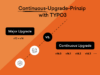
Digital systems are not finished projects, but living products. Yet in many companies, the reality is quite different: A TYPO3 upgrade (often mistakenly referred to as a simple “Typo update”) is put off until the technical pressure becomes so great that it turns into a massive, expensive project.
The continuous upgrade principle breaks this vicious cycle of technical debt and budget shocks. Our current project at woelm demonstrates how this works in practice.
The upgrade dilemma: The fear of the version chain
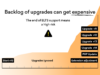
Many companies take a reactive approach. They wait until even the last ELTS support for a version has expired. Then they’re faced with a series of upgrades: from TYPO3 v11 to v12, then to v13, and finally to v14 – You must go through each upgrade step. It is not possible to upgrade directly from v10 to v14.
Take woelm as an example: Here, we faced a classic challenge—a jump across two major versions (v10 to v12). While patch-level updates often run quietly in the background, such major upgrades fundamentally change the architecture. Without continuous maintenance, such a jump quickly turns into a “major digital construction site.”
The Consequences of Waiting:
- Budget Shock: A massive one-time expense must be painstakingly approved.
- Risk Accumulation: The more versions that are skipped, the more complex database migrations and extension customizations become.
- Dependencies: Security vulnerabilities and performance issues caused by outdated PHP versions are prolonged.
- Compliance: Die Installation ist möglicherweise nicht mehr DSGVO-konform
What Continuous Upgrade Really Means
In modern software development, we often talk about Continuous Integration (CI) and Continuous Deployment. Behind these terms lies a simple principle: Instead of delivering software in large, infrequent releases, changes are implemented in small, frequent, and automated increments—this keeps systems stable, allows errors to be detected early, and distributes the workload evenly. The continuous upgrade principle applies this very agility to the management of your CMS.
Instead of undertaking a “mammoth upgrade” every three years, the upgrade becomes a fixed, ongoing part of maintenance.
Deep Dive: Behind the Scenes of a Migration
What actually happens technically during an upgrade? Anyone who thinks it’s as simple as a single click underestimates the complexity of mature enterprise systems. The woelm example illustrates the depth of work required:
- Core updates: Deprecated functions have been replaced, and existing code has been modernized.
- Structural migration: The transition from grid elements to containers ensures compatibility with future TYPO3 versions.
- Technical foundation: The runtime environment was also updated as part of the PHP update.
- Content consistency: Existing data structures were migrated in a clean and controlled manner.
Are you planning your next major TYPO3 upgrade?
We’ll guide you through the transition to the latest LTS version and establish a low-maintenance continuous upgrade process for your platform.
Book an appointment
The “credit balance approach”: predictability instead of surprises
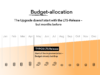
The core of this model is a monthly allocation within the maintenance contract. As soon as a new TYPO3 version reaches LTS (Long-Term Support) status, the developers begin implementation immediately, in a gradual and controlled manner.
- No new quotes: The budget is already “set aside” through the ongoing allocation.
- No approval loops: The process is already defined and starts automatically.
- Resource efficiency: The agency can make optimal use of its capacity, which often leads to better terms for the client.
- and compliance for the client.
Business benefits: Why the model pays off
| Traditional major upgrade | Continuous upgrade model |
| Unpredictable one-time costs (CapEx) | Predictable monthly amounts (OpEx) |
| High project risk due to “big bang” | Minimal risks through small steps |
| Long decision-making processes & committees | Unbureaucratic, immediate start |
| Outdated features until release | Early access to new features |
“We’ll get back to you when the upgrade is really necessary.” – This sentence is almost always the beginning of a major project down the line. With continuous upgrades, we prevent technical debt before it arises.
Why TYPO3 Is the Perfect System for This Approach
As an enterprise CMS, TYPO3 is consistently designed for long-term operation. The TYPO3 roadmap is transparent years in advance.
Clear release cycles: We already know today when v14 or v15 will be released.
Stable interfaces: A clean separation of the core and custom extensions minimizes effort.
Compliance & Security: Continuous updates are an essential part of compliance with legal regulations (GDPR).
FAQ: Managing TYPO3 Upgrades Wisely
In the traditional model, significant capital expenditures (CapEx) are incurred every three years. Our model transforms these into predictable operating expenses (OpEx). The monthly flat fee eliminates the “budget shock.”
That is the biggest advantage of the continuous approach: we identify incompatibilities not only at the end of a three-year waiting period, but as they arise. Since we regularly test the system in a test environment against the current state of development of the TYPO3 core, we can evaluate alternative solutions early on or refactor the code before the old version reaches its “end-of-life.” The risk of a total failure or costly last-minute adjustments drops to nearly zero.
No, we operate with a risk-aware approach. We use TYPO3’s development cycles strategically: During sprint releases, we monitor the code status until the feature freeze. We typically begin the upgrade to the production environment as soon as the version reaches LTS-status (Long-Term Support) and the most important third-party extensions are available in a stable version. Thanks to the budget allocation we’ve already set aside, we can then get started without delay.
We strictly separate development, test, and production environments. Every upgrade package undergoes automated testing (unit and acceptance tests) and manual quality assurance in the test environment. Deployment only takes place once all checks have passed. Since the changes in the continuous model are significantly smaller than in a “big bang” last-minute upgrade, the likelihood of errors is drastically reduced.
The model is based on fairness and efficiency. If we finish sooner than expected due to a particularly clean project architecture and a high degree of automation, the budget does not expire. It remains earmarked for the technical development and security of your TYPO3 platform. If the current upgrade requires less effort than planned, the remaining allocation is not used up but is instead applied to future TYPO3 upgrades, necessary PHP updates, and related technical measures. This ensures that the budget remains directly invested in the future viability and maintainability of your system.
That’s exactly where it’s essential. Interfaces are the most sensitive points in any upgrade. Through regular, small deployment cycles, we ensure that data flows between TYPO3 and your third-party systems (such as SAP, Microsoft Dynamics, or Salesforce) are continuously validated. A major relaunch every few years poses a massive risk to these business-critical processes; continuous upgrades safeguard them.
Conclusion
If you view your website as a strategic business tool, you shouldn’t treat it like a piece of static furniture that you replace every five years. A continuous development process ensures quality assurance, better SEO stability, and a more agile response to market changes.
Continuous Upgrade means: You no longer have to worry about the next “big launch.” Your system simply grows with you.
The woelm example shows: A smooth migration is no accident, but the result of precise planning. Through the continuous upgrade principle, we keep complexity away from the customer. The result is a high-performance platform free of technical legacy issues.