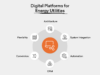
Digital platforms are the strategic core of modern sales and customer loyalty. The following fields of action are particularly crucial for municipal utilities and energy providers.
Future-Proof Digital Architecture as a Strategic Foundation
A future-proof architecture for energy utilities is modular, API-based, and decouples the frontend from the backend. Specifically, this means:
- Headless CMS instead of monolithic systems
- Clear API interfaces to SAP IS-U or billing systems
- Scalable frontend with high performance
- Independent development of individual components
- Connectivity to existing CRM and customer management systems for seamless customer journeys—from direct sales and comparison platforms like Check24 to the utility’s own “online tariff shop”
Content Management Systems such as Storyblok or Craft CMS enable this structure. Decoupling the frontend and backend increases flexibility regarding regulatory changes and reduces technical dependencies.
CRM Strategy in the Energy Sector: Integration Over Feature Set
An energy provider’s CRM must integrate with existing billing systems and enable simple customer processes. Typical requirements include:
- Integration with SAP IS-U
- Centralized management of customer master data as well as cost and tariff plans with individual delivery options
- Omnichannel communication
- Marketing automation
- GDPR compliance
- Accessibility
Relevant market solutions include SAP Customer Experience, Microsoft Dynamics 365, and Salesforce Energy & Utilities Cloud. The specific choice depends on the existing system landscape and integration strategy. The decisive factor is integration capability—not just a wide range of features.
Low-Risk Modernization of Legacy IT Landscapes
For energy providers with historically grown IT structures, the question is not just whether to perform a platform relaunch, but which transformation route is strategically most sound. In addition to a full relaunch—which can be absolutely sensible in the case of structural legacy issues or a lack of future viability—a phased modernization of digital platforms often offers a lower-risk and more economically predictable path.
What does phased modernization mean for energy utilities?
Phased modernization describes the transformation of an existing digital platform in clearly defined stages—rather than a complete system replacement in a “big bang.” The goal is to ensure operational stability, regulatory security, and continuity of supply during the transformation.
Why is this approach particularly relevant in the energy sector?
Energy providers work with complex backend systems such as billing, market communication, CRM, and grid processes. A complete relaunch can create significant project risks—for example, through data migration, integration effort, or compliance requirements. Modular modernization reduces these risks and allows for a controlled evolution of the digital platform.
Which measures are considered best practice for modernizing digital platforms?
Proven procedures in the energy industry include:
- Implementation of a decoupled frontend (headless approach)
- Establishment of clearly defined API interfaces (API-first strategy)
- Migration of individual modules instead of replacing the entire system
- Temporary parallel operation during the transition phase
These architectural principles increase flexibility, improve the integration of new services (e.g., e-mobility, dynamic tariffs, customer portals), and create a scalable platform structure.
When is a platform relaunch still advisable?
A full relaunch is strategically necessary when the existing IT architecture is no longer maintainable, technical debt prevents innovation, or regulatory requirements can no longer be structurally mapped. In such cases, a clearly designed restart creates more long-term stability and future viability.
Are you planning a relaunch or phased modernization?
We help you define the strategically right transformation route.
Technical flexibility in the face of regulatory changes
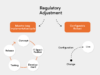
Energy utilities require systems that can map price and tariff logics in a flexible and adaptable manner without each change triggering a separate development project.
Legal adjustments such as new network charges, price caps, or subsidy mechanisms must not lead to months-long implementation cycles. Digital platforms must be built so that functional changes can be quickly configured and rolled out. Modern systems can be optimally configured so that adjustments can partly be created centrally and adapted individually as well as intuitively when needed, making marketing and sales teams more efficient.
The technical requirements for this are:
- Clear separation of business logic and presentation layer
- Configurable price and tariff parameters
- Modular content components for notices, mandatory information, and contract details
- Structured interfaces to billing and backend systems
- Fast and controlled deployment processes
- Deep understanding of business processes to map them efficiently
Flexible systems shorten the implementation time for legal adjustments, reduce operational risks, and increase strategic agility.
Digital visibility as a lever for regional market share
Comparison portals like Check24 bundle search intent and act like digital marketplaces from the perspective of energy utilities. They dominate generic search queries and direct customers willing to switch into standardized comparison processes.
Regional energy providers who are not visible for search queries such as “electricity price + city” or “switch electricity provider + region” leave this demand to the marketplace—and thus often to pure price competition.
It should be noted that different tariff models prevail depending on the portal, and therefore different strategies must be tested and established for each platform (direct sales, website platform, and comparison portals).
In contrast, having your own organic visibility means:
- Direct customer relationships without platform dependency
- Higher margins due to less commission pressure
- Stronger brand loyalty in the regional environment
- Better testability of various tariff models
- Securing market leadership
Regional energy utilities strengthen their digital presence by:
Strategically building local landing pages
- Using clean URL structures
- Complying with technical SEO standards
- Ensuring fast loading times
- Utilizing structured data
Visibility is therefore not an isolated marketing topic, but a central lever for securing regional market share and reducing platform dependency.
Optimization of digital sales and closing processes

Conversion increases in the energy sector are based on clear user guidance and reduced complexity.
The tariff calculator is often the first touchpoint in the digital sales process. Complex input fields, unclear bonuses, or slow loading times lead directly to drop-offs.
We demonstrate how crucial the technical architecture and UX design of a tariff calculator are for conversion and performance in our detailed article on [Tarifrechner für Energieversorger / Tariff Calculators for Energy Utilities]. There, we delve into integration requirements, performance factors, and best practices. Furthermore, our [Case Study on Mark-E] provides a concrete practical example, illustrating how a strategically designed tariff calculator can measurably improve both user guidance and closing rates.
Key success factors for digital sales processes include:
- Reduced input fields
- Transparent tariff presentation
- Clear and understandable price structures
- Mobile-optimized user guidance
- Continuous analysis of the sales funnel
Complexity leads to drop-offs. Simplification drives conversions.
AI as an efficiency driver in the energy sector
AI applications in the energy sector primarily aim at efficiency, scalability, and cost reduction. The focus is on operational relief and data-driven decision support—not technological experiments.
Typical areas of application include:
- Automation in Customer Service
Chatbots and AI-powered assistants handle first-level or standard service inquiries regarding partial payments, meter readings, or contract terms, significantly reducing the workload for service teams. - Forecasting Load and Consumption Data
AI models improve load forecasts, support grid planning, and help calculate procurement risks more precisely. - Internal Knowledge Management
AI-supported search systems provide employees with quick access to regulatory requirements, process documentation, or tariff information. - Process Optimization in Administration and Billing
Automated verification mechanisms detect anomalies, reduce manual processing steps, and accelerate turnaround times.
Strategic embedding is crucial:
AI only unfolds its full potential when it is seamlessly integrated into existing system landscapes and supports clearly defined business goals.
FAQ for Municipal Utilities and Energy Providers
Phased modernization means targeted renewal of individual components instead of a complete replacement of existing systems. Typical measures include:
- Introduction of a decoupled frontend
- Establishment of clear API interfaces
- Modernization of specific modules such as the CMS or customer portal
- Parallel operation of old and new system components
The goal is to increase the capacity for innovation without compromising ongoing operations.
In most cases, a modular modernization is more sensible than a complete relaunch.
A big-bang relaunch is only strategically necessary if:
- The existing architecture is structurally no longer viable
- Security requirements can no longer be met
- Integrations have become technically nearly impossible
Modular approaches reduce risk, distribute investments, and ensure stability.
Yes, if digital development is strategically planned.
A headless architecture is not worthwhile because of the trend, but because of long-term flexibility. Even smaller municipal utilities benefit from:
- Faster implementation of new content
- Clear API interfaces
- Better performance
- Reduced technical dependency
The decisive factor is not the size of the company, but its digital ambition.
Low-risk modernization is based on clear architectural planning and prioritization according to business impact. Key measures include:
- Analysis of existing system dependencies
- Definition of a target architecture
- Step-by-step migration of individual components
- Structured testing and transition phases
The decisive factor is that the transformation is not merely project-driven but strategically managed.
New dependencies often arise from:
- Proprietary interfaces
- Lack of an API strategy
- Customized, non-standard solutions
- Isolated tools without an integration concept
Clear architectural documentation, standardized interfaces, and modular systems reduce lock-in risks. Technology decisions should always be evaluated with a long-term perspective—not just on a project-by-project basis.
The greatest effort is rarely technical; it is almost always organizational. Success is determined by:
- Clear responsibilities and ownership
- Aligned processes between IT, Marketing, and Sales
- Realistic roadmaps
- Prioritization based on business impact
Without internal alignment, even technically sound projects are bound to fail.
Digital platform projects should not be viewed merely as a cost block. Relevant KPIs include:
- Conversion Rate (Direct impact on sales)
- Customer Lifetime Value (Long-term profitability)
- Churn Rate (Retention and loyalty)
- Organic Visibility (Reduction in customer acquisition costs)
- Reduction of Manual Processes (Operational efficiency)
- Time-to-Market for regulatory adjustments (Agility and compliance)
The ROI is derived from a combination of efficiency gains and additional revenue potential.
Yes, if data protection, documentation, and compliance are not taken into account from the very beginning. Therefore, the following applies:
- Privacy by Design
- Clear data flows
- Documented interfaces
- Early coordination with data protection officers
Regulatory security is not an “add-on” but a fundamental part of the architecture.
Not only when systems reach their absolute limits. A good time is:
- Before major regulatory changes
- Before rebranding or strategy processes
- When abandonment rates are rising
- When organic visibility is declining
- When there is high IT dependency in day-to-day business
Digital transformation should be proactive, not reactive.
Conclusion
The challenges faced by marketing and digital teams at energy utilities and municipal providers cannot be solved in isolation. Architecture, CRM integration, regulatory flexibility, and digital visibility are all deeply interconnected.
A modular, API-first platform architecture creates the foundation for high-performance, maintainable, and scalable system landscapes that can respond swiftly to market and legislative changes. Furthermore, integrated CRM processes and optimized digital sales journeys strengthen customer loyalty and conversion.
Consequently, digital infrastructure is not merely an operational detail, but a central competitive factor for energy providers.